A monogram is a decorative arrangement of one to three interlocking letters—usually initials—fused into a single symbol that serves as a personal or brand mark. It is a decorative style within the broader family of lettermark logos, not a completely separate logo category.
The rich history of monograms stretches from Ancient Greek coins around 350 BC and royal signatures all the way to today’s fashion houses and personalized gifts. Not every initial-based logo qualifies, though. Marks like LG and HP are commonly called monograms but technically aren’t—a distinction we’ll cover in detail below.
Want to experiment with monogram-style logo ideas? Try our AI Logo Generator to prototype designs from your own initials in minutes.
Table of Contents
- What Is a Monogram? (Quick Answer)
- How Monograms Differ from Other Lettermarks
- Historical Origins of Monograms
- Monograms in Royalty, Society, and Wartime
- Monograms in Modern Branding and Fashion
- Personal Monograms and Everyday Use
- Logos Often Mistaken for Monograms
- Monograms, Personalization, and Luxury Perception
- Key Takeaways
- FAQs
What Is a Monogram? (Quick Answer)
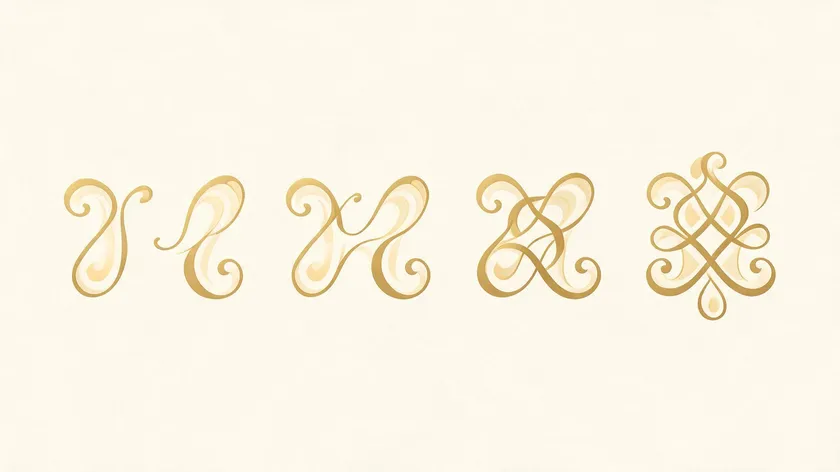
A monogram is a decorative design that combines two or more letters into a single, unified symbol. The letters are woven, overlapped, or fused together rather than simply placed side by side in a standard font.
Traditionally, the letters represent initials—from a person’s first name initial, middle, and last name; a couple’s shared surname; or a brand name. Think “LV” for Louis Vuitton or the interlocking “N” and “Y” of the New York Yankees.
In logo design terms, a monogram logo is a decorative sub-style of the lettermark family. All monograms are lettermarks, but not all lettermarks are monograms. The key difference is the visual fusion: a true monogram weaves its letters into one characteristic shape. This is the same distinction we make in our guide to different types of logos.
Monograms commonly appear on stationery, wedding invitations, luggage tags, handbags, and jewelry. They can signify personal identity and ownership of belongings—turning an ordinary item into something distinctly yours.
Where a plain set of initials in a basic typeface reads as simple text, a monogram formed from those same letters becomes an unmistakable symbol.
How Monograms Differ from Other Lettermarks
Both monograms and other lettermarks use initials, but they are built and read differently.
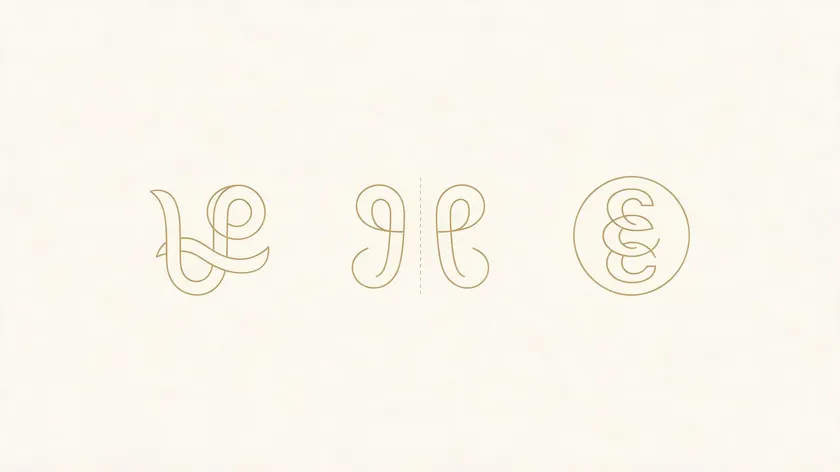
A lettermark logo is a mark made from initials or a short name—like IBM—set as straightforward typography with clear, separate letters. A monogram logo, by contrast, aims to visually merge its letters. They may overlap, share strokes, interlock, or sit within shapes like a traditional circle, shield, or crest.
For a broader look at letter-based marks beyond monograms—from single-letter icons to badge layouts—see our complete initial logo guide.
Typical monogram structures include the following:
- Interlocking pairs (one letter threaded through another)
- Mirrored double letters (like Gucci’s reflected G’s)
- Stacked or entwined three-letter arrangements inside a circle or diamond shape
Readability can be slightly reduced in monograms on purpose. The goal is creating a distinctive, ornamental symbol rather than purely linear text. In our framework, monograms are a decorative style within the lettermark category—not a separate type entirely.
This distinction matters when you decide on a branding direction. Choose a simple lettermark for maximum legibility. Choose a monogram format for more ornate, personal, or luxury-driven expression.
Historical Origins of Monograms
Monograms carry a rich history that predates modern fashion by thousands of years. The word itself derives from a Greek word—monogrammon—meaning a character formed of several letters in one design.
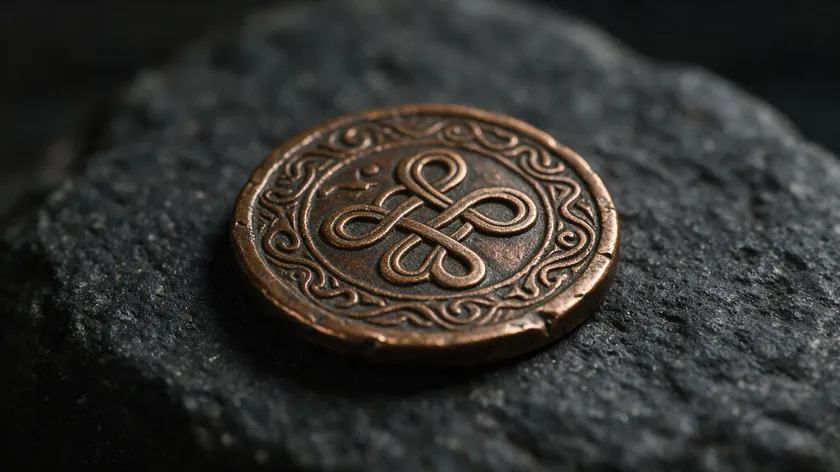
The first recorded monogram dates back to 350 BC. Ancient Greek coins compressed the first two letters of city names into compact marks, helping distinguish which mint or city-state had issued the currency. These were early tools of identity and authenticity stamped onto metal coins.
Roman and Byzantine rulers later adopted monograms as royal ciphers, stamped on seals, coins, and official documents to denote authority. One of the most influential early examples is the Chi Rho: the Chi Rho monogram represents the first two letters of “Christos” (Χ and Ρ) in Greek.
Monograms were used as Christian symbols in military standards, painted on armor, and displayed across the empire.
By the Renaissance, artists and craftspeople signed paintings, engravings, and metalwork with stylized monogram letters as a personal mark. This creative tradition set the stage for monograms to become social status symbols on linens, silverware, and luggage in the centuries that followed.
Monograms in Royalty, Society, and Wartime
Royalty
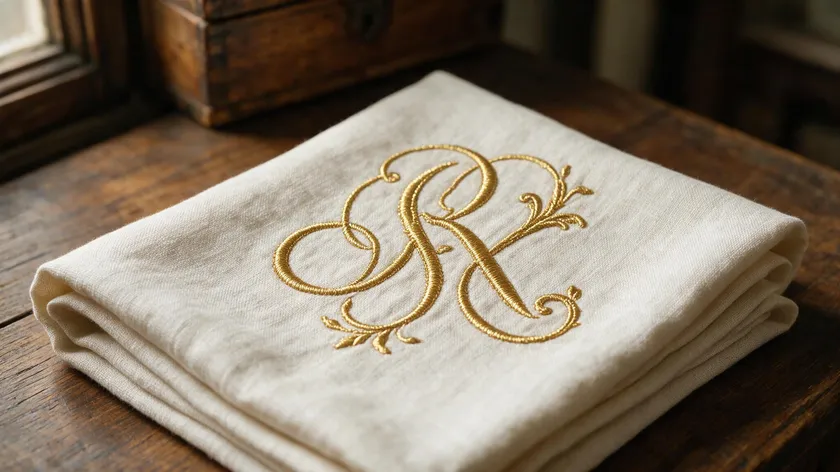
From the 17th to early 20th century, monograms became inseparable from prestige. Monograms were used as royal signatures in history—crowned initials appeared on gates, uniforms, and state documents as condensed personal signatures of ruling houses across Europe.
Society
In the Victorian era, monograms symbolized high social status. Wealthy families had embroidered monogram letters placed on household linens, traveling trunks, and silverware as marks of property and refined taste. Owning monogrammed belongings was a sign of both means and manners among royalty and the upper classes.
Wartime
Monograms also played a role far removed from luxury. During World War II, the Norwegian “H7” symbol—a stylized monogram for King Haakon VII—became an emblem of loyalty and resistance under occupation.
Poland’s “PW” monogram, known as “The Anchor” or Kotwica, combined the letters P and W to represent “Fighting Poland.” It was used as a graffiti-like emblem during the Warsaw Uprising of 1944, turning a simple combination of letters into a powerful act of defiance.
Monograms in Modern Branding and Fashion
In the 19th and 20th centuries, monograms shifted from household linens to global brands. Industrialization made it possible to repeat the same monogram logo across thousands of products, turning it into a recognizable brand asset.
General Electric’s monogram features interlocking “G” and “E” letters inside a circular badge, used since the 1890s. The New York Yankees’ interlocking “N” and “Y” were originally drawn by Louis Comfort Tiffany in 1877 as a medal design and adopted as a team emblem in 1909—now one of baseball’s most famous monograms.
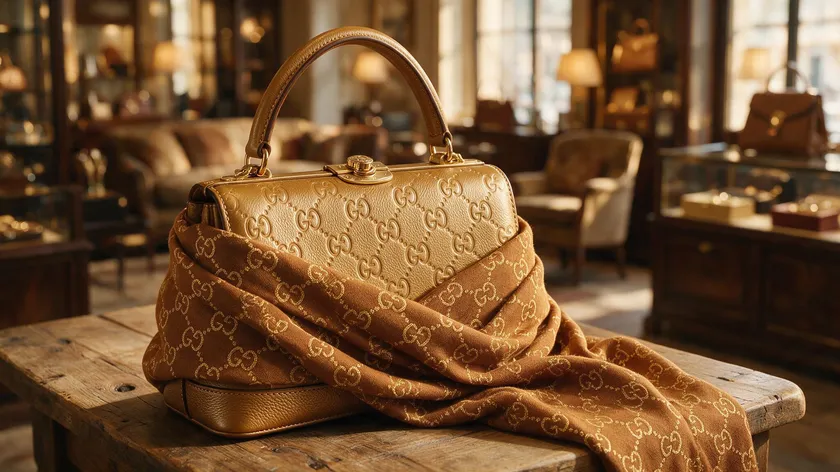
In luxury fashion, Louis Vuitton’s “LV” and Gucci’s double-G serve as monogram patterns repeated across handbags, luggage, and accessories to sign and signal craftsmanship.
Monograms can serve as memorable brand identities for businesses, and monograms are used in luxury branding to create distinctive patterns—tiled across fabric, engraved into hardware, or used to emboss leather for texture.
Louis Vuitton’s monogram canvas, introduced in 1896, is celebrating its 130th anniversary in 2026. Gucci’s mirrored double-G first appeared in the 1960s.
Our AI Logo Generator can help you explore both monogram-style and lettermark logo options from your initials—whether you prefer luxury-inspired or minimalist branding.
Personal Monograms and Everyday Use
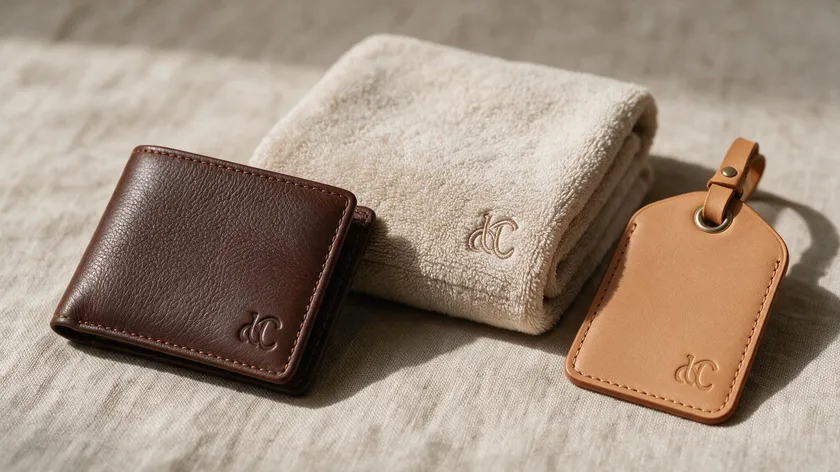
Monograms moved from royal households to middle-class homes, wedding registries, and personalized gifts throughout the 20th and 21st centuries. Monograms are commonly applied to clothing, gifts, and personal items.
Traditional monograms use first, middle, and last initials in that order. A three-letter monogram typically arranges initials as first name, last name, and middle name, with the last name initial enlarged and placed in the center. Two-letter monograms simply use the first name initial and last name initial side by side.
For married couples, monogram initials often include a shared surname initial. The woman’s initial comes first on linens for married couples. Women who keep a maiden name sometimes incorporate it as well. A four-letter monogram may require simpler fonts for legibility.
Common placements include the corner of bath towels, upper chest on clothing, cuff areas, luggage tags, leather wallets, journals, phone cases, and home decor items like pillowcases. Traditional monograms often use a circular or diamond arrangement.
Monogrammed gifts—like engraved wine glasses, embroidered robes, or traditional circle monogram necklaces—remain popular for weddings, anniversaries, graduations, and housewarmings. Choosing fonts, layouts, and monogram letters allows people to express personality and family stories in subtle ways.
Modern technology like laser engraving, digital embroidery, and online customization tools has made personal monogramming more accessible than in the past.
Logos Often Mistaken for Monograms
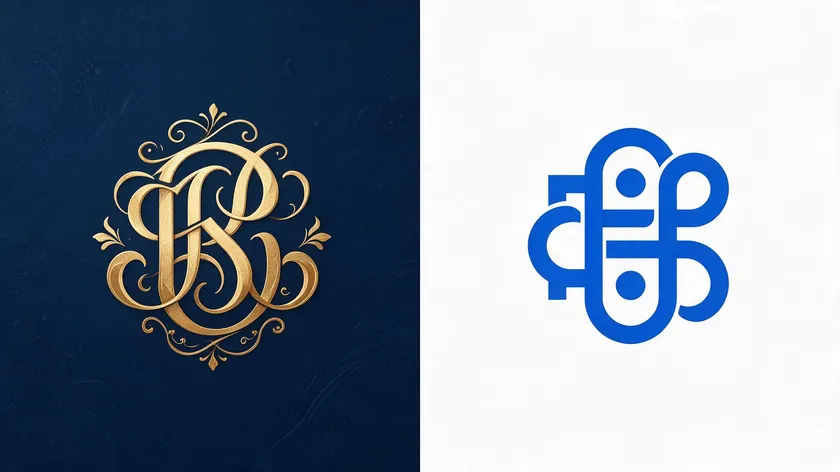
Many logos built from initials are casually called “monograms,” but some do not meet the stricter definition of letters that truly interlock or fuse.
Take LG: its logo arranges an “L” and a “G” inside a circle, but the letters do not interlock—instead, negative space is used so the “L” suggests a nose and the “G” outlines a smiling face. Because LG’s letters remain structurally separate and primarily form a pictorial face, it is more precise to call this a lettermark with illustrative elements, not a pure monogram.
HP’s logo places a lowercase “h” and “p” side by side within a circle, with a forward-leaning cut. The letters do not merge or share strokes. HP’s mark is a streamlined lettermark—clean initials in a geometric frame emphasizing legibility and motion rather than decorative interlocking.
Contrast these with true monograms like GE, the New York Yankees, Louis Vuitton, and Gucci, where strokes overlap or mirror to form a single, ornamental symbol. The table below summarizes the distinction:
| Logo | Classification | Why |
|---|---|---|
| General Electric | Monogram | Interlocking G and E since 1892 |
| New York Yankees | Monogram | Interlocking N and Y, designed by Tiffany in 1877 |
| Louis Vuitton | Monogram | Interlocked L and V |
| Gucci | Monogram | Mirrored double G |
| LG | Lettermark | Letters form a face using negative space and don’t interlock |
| HP | Lettermark | h and p sit side by side without merging |
Reserving “monogram” for fused or interlocking forms helps designers and clients communicate more clearly about what they actually need.
Monograms, Personalization, and Luxury Perception
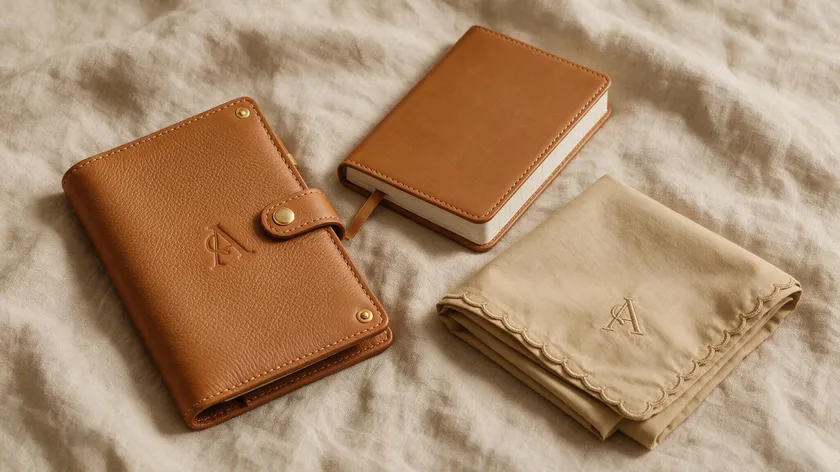
Monograms carry strong emotional associations around ownership, care, and luxury. Adding initials to everyday items—notebooks, passport holders, and pillowcases—can make them feel more personal and distinctive, even when mass-produced.
This connects to the broader trend of personalization: consumers choosing colors, materials, and monogram letters to tailor products to their personal style or to the recipient of a gift. Monogrammed gifts often feel more formal and enduring, which is why they are common for milestones like weddings, births, and retirements.
The arrangement of initials in a monogram can communicate different styles such as elegance or modernity. Monograms can be designed using various fonts and colors—minimalist, geometric monograms feel modern and understated, while flourished scripts and ornate crests evoke tradition and opulence. This range lets you decide how much heritage or contemporary personality your mark conveys.
This perception is rooted in history. Because monograms were once limited to royalty and the wealthy, the aesthetic still carries a subtle touch of luxury—even when applied to accessible, creative products.
Key Takeaways
- A monogram is a decorative, interlocking arrangement of two or three letters—traditionally initials—fused into one unified symbol.
- Their historical path runs from Ancient Greek coins and royal ciphers to resistance symbols (Kotwica, H7), luxury fashion houses, and everyday monogrammed gifts.
- Monograms are a stylistic subset of lettermark logos, distinct from simpler initial-based marks like LG or HP.
- Monograms continue to thrive because they balance practicality (identification) with emotional value (heritage, ownership, and personalization).
- Whether used for a brand, couple, or individual, a well-crafted monogram logo can function as both an emblem of identity and a decorative design element.
Ready to bring your brand to life? Turn your initials, name, or idea into a professional logo in seconds with our AI Logo Generator — fully editable, yours to own.
FAQs
Below are answers to related questions about monograms that go beyond the core definition covered above.
Is a monogram always made of three letters?
While three-letter monograms are the most traditional in Western naming customs, monograms are not limited to three. Single-letter monograms often represent a surname or organization, while two-letter monograms might stand for first and last initials or brand initials like “LV.”
Monograms usually include one to three letters, though more elaborate designs exist. However, designs with more than three letters become harder to keep unified and legible—a four-letter monogram, for example, typically requires simpler fonts.
Are circle monograms more traditional than other shapes?
A traditional circle monogram places letters inside or curving around a circular boundary. Circles became popular because they work well on seals, coins, buttons, and compact surfaces—they have a natural, finished quality.
That said, other shapes have long histories too. Ovals, shields, diamond shapes, and crests all appear in classical and heraldic monogram traditions. Shape choice should reflect context: circles suit compact modern uses and website favicons, while shields and crests lean toward more formal or heraldic designs.
Can a monogram include symbols or numbers?
Classic monograms use letters only. However, contemporary designers sometimes blend letters with small symbols—crowns, hearts, or anchors—for decorative effect, especially on wedding invitations or anniversary items.
When symbols or numbers dominate the design, the result moves closer to a badge or emblem than a pure monogram. Subtle dates or icons can complement monogram letters without overshadowing the initials, but the letters should remain the primary visual element.
Do all cultures use monograms the same way?
Monograms appear across many cultures but follow different naming orders, scripts, and decorative traditions. Western Latin-letter monograms typically emphasize the middle letter as the surname initial, while East Asian traditions use seal-style name marks with entirely different visual conventions.
Intertwined Arabic or Cyrillic initials serve similar purposes for personal or official use. When creating a monogram for an international audience, it is important to respect local naming conventions and letterforms to avoid misrepresentation.
Are digital monograms replacing hand-crafted ones?
Digital design tools and manufacturing—from laser engraving to computer-driven embroidery—have made monogramming faster and more precise. But they have not eliminated hand-crafted techniques.
Monogramming can use techniques like embroidery and debossing for tactile, premium results. Engraving cuts designs into materials using sharp tools, debossing creates a recessed design by pressing a die into material, and embossing raises the design above the material’s surface.
These hand-crafted approaches remain popular for high-end stationery, bespoke fashion, and artisan glass or metal gifts. Digital and hand-crafted methods are complementary—digital for scalability and hand-made for uniqueness and tactile character.

